SNOW REMOVAL
Street Snow Removal
The Public Works Department is responsible for snow and ice control on City streets and parking lots. To provide safe and efficient winter maintenance, the City follows a Snow and Ice Control Plan:
All streets, parking lots, and applicable sidewalks are covered under this plan to ensure public safety and accessibility during winter weather events. The normal Public Works work shift is 7 a.m. to 3 p.m., Monday through Friday, excluding City holidays. For snow and ice events expected to arrive or continue beyond the normal workday, staff are divided into A and B shifts. Each shift typically works 12 hours, providing a 24-hour response capability to ensure streets and public areas are cleared efficiently. The Public Works Department strives to provide the best service possible during and after snow and ice events. Residents can help by following these guidelines: For storm events with four inches or more of snow, City alleys will be cleared. Alley snow removal is performed during regular work shifts and is completed after all City streets, sidewalks, and parking lots have been cleared. The City uses three types of chemical deicers for snow and ice control: rock salt (sodium chloride), liquid calcium chloride, and salt brine. All work by lowering the freezing point of water. Their effectiveness depends on several factors, including chemical concentration, pavement temperature, weather conditions, road type, shading, and traffic patterns. Rock Salt (Sodium Chloride): Liquid Calcium Chloride (32 percent solution): Salt Brine (23 percent solution): Anti-icing is a proactive snow and ice strategy designed to prevent ice from bonding to pavement surfaces. It involves applying liquid ice control chemicals before or at the onset of a snow or ice event. Anti-icing reduces the amount of snow and ice that accumulates, allowing plows and other treatments to work more effectively. A: Streets are prioritized to clear major travel routes first, ensuring public safety vehicles can access most areas. Primary plowing also provides the most residents a cleared roadway within two-to-three blocks of their home. Other priorities include schools, hospitals, major commercial centers, and other high-use facilities. A: The City has thousands of driveways along City streets. Clearing driveways would require significant resources that are dedicated to clearing primary and neighborhood streets. A: The City aims to clear all primary routes within 12 hours after the snow stops. Neighborhood streets are cleared within 24 hours after primary routes, and cul-de-sacs and dead-ends within 36 hours. Exact times cannot be provided due to weather variations such as blowing snow or other conditions. See the Primary Snow Routes Map for more information. A: Decisions depend on air temperature, pavement conditions, time of day, and precipitation type. Plowing may be more effective in some conditions, while salting could be counterproductive on cold, dry, or drifting snow. A: Depending on conditions, the trucks may be applying anti-icing materials, checking road conditions, or returning for additional materials. A: Abrasives like sand or cinders increase traction but do not melt snow and ice. They also create stormwater, tracking, and maintenance issues, making them less effective for winter road safety. A: Public Works works with METCAD, the Police, and Fire Departments to ensure emergency access during snow events. Anyone experiencing a medical emergency should call 911; dispatchers will coordinate plow access for emergency vehicles. A: Residents are encouraged to use off-street parking during snowfalls to allow crews to clear streets efficiently. A: The Illinois Department of Transportation (IDOT) maintains State roads, including snow removal. State roads are shown on the Primary Snow Routes Map. A: Cul-de-sacs and dead-ends have lower traffic volumes and cannot be plowed using standard trucks. Fewer specialized units are available, so clearing may take longer. A: Call the Public Works Operation Division at 217-403-4700. A: Report damages as soon as possible to Public Works Operations at 217-403-4700. Include your name, address, phone number, and description of the damage. Note: Most mailbox damage is caused by thrown snow, not direct contact with the plow. Residents can help prevent damage by ensuring mailbox posts or supports are sturdy.Snow and Ice Control Plan
Resources
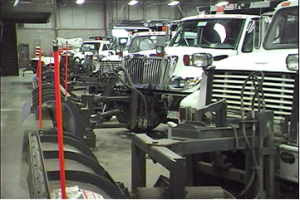
Helpful Hints
Primary and Secondary Snow Routes
 The City’s Snow and Ice Control Plan divides City streets into primary and secondary routes:
Alleys
Deicers
Anti-icing
Q: Why can’t you plow my street now?
Q: The plow left snow at the end of my driveway. Can someone clear it?
Q: Can you tell me exactly when my street will be plowed?
Q: Why do you sometimes salt instead of plow, or plow instead of salt?
Q: Why do snow plow trucks sometimes just ride around without plowing?
Q: Salt corrodes my car, sidewalk, and driveway. Couldn’t you use cinders instead?
Q: I have a heart condition. Can you plow my street in case of an emergency?
Q: When is parking prohibited on City streets?
Q: Who is responsible for plowing State roads?
Q: Why does it take longer to plow cul-de-sacs and dead-end streets?
Q: Who do I contact with general snow and ice removal questions?
Q: Who do I contact if my property, car, or mailbox is damaged by snow removal?
Sidewalk Snow Removal
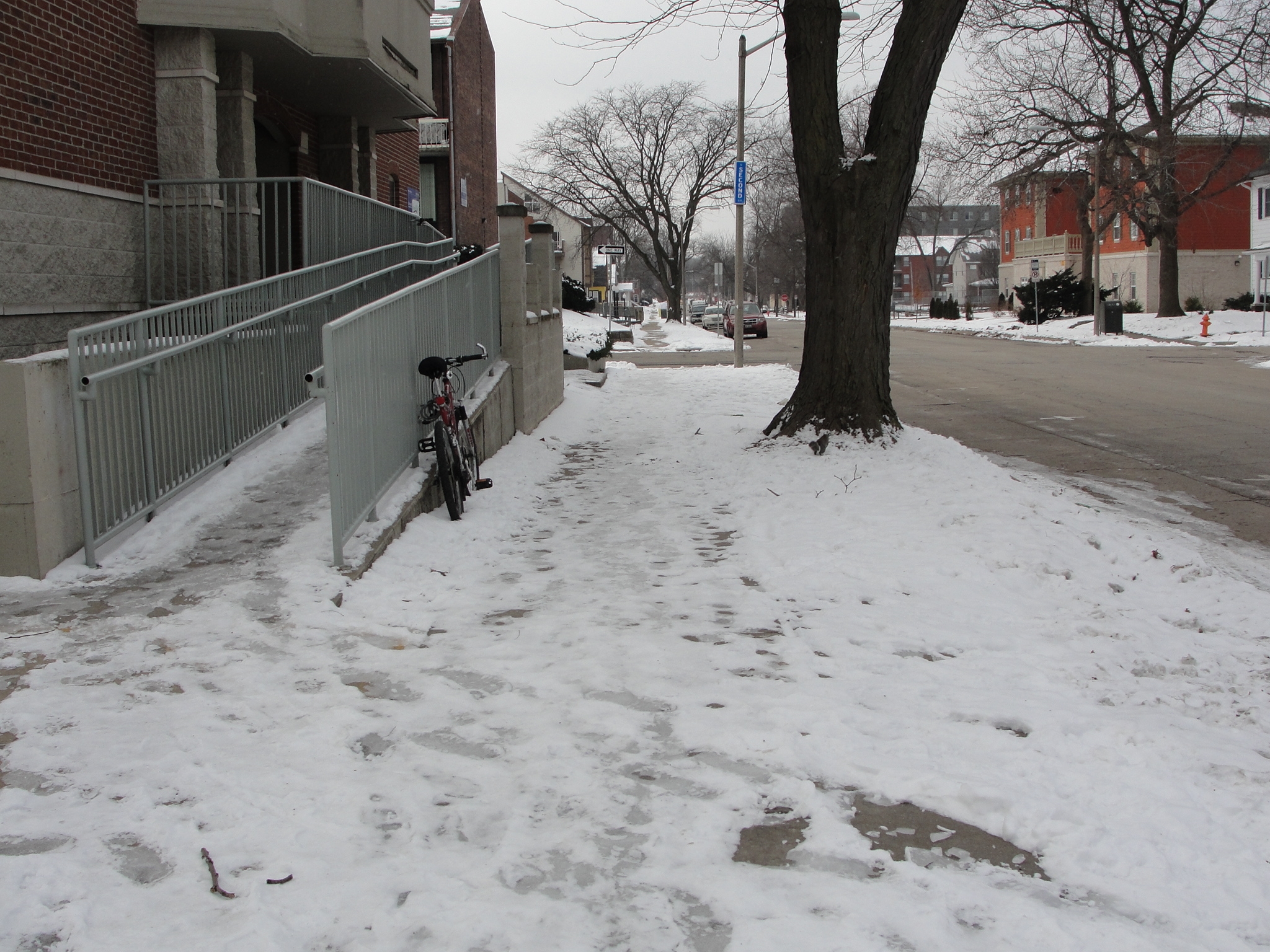 Property owners in the University District and Downtown area are responsible for clearing snow, ice, sleet, or freezing rain from sidewalks adjacent to their property.
- Purpose: To maintain safe and accessible sidewalks for the general public.
- Trigger: Applies when there is an accumulation of two (2) inches. The Public Works Director will publicly declare when the ordinance is in effect.
- Compliance: Property owners have 24 hours from the declaration to clear the sidewalks.
- Path Width: Maintain a cleared path the width of the sidewalk, or 48 inches, whichever is less.
- Corner Lots: Owners must also clear paths to the nearest crosswalk.
- Snow Placement: Snow should be stored on your property or in the parkway between the sidewalk and street curb. Snow cannot be deposited on City streets, as this can block vehicles and parking meters.
Note: The above information provides examples of common violations and is not all inclusive. For complete details, consult the City Code or speak with a City inspector.
You may also refer to the Sidewalk Snow Removal Brochure for additional information and a map of the areas.
For more information, please contact:
City of Champaign
Public Works Department
702 Edgebrook Drive | Champaign, IL 61820
217-403-4700
[email protected]